
The Ghost Genome: Mapping a Constrained Chemical Execution Layer of Human Biology
By Ross Youngs, August 31, 2026 The Ghost Genome: Mapping a Constrained Chemical Execution Layer of Human Biology Abstract Genomics maps biological capacity but does not directly report the real-time chemistry produced when host and microbial genes, viruses, diet, medicines, anatomy, environment, and time interact. Here, the ghost genome is a temporary working name for
Continue ReadingPolypeptides synthesized by common bacteria in the human gut improve rodent metabolism
Polypeptides synthesized by common bacteria in the human gut improve rodent metabolism (July 31, 2025) Abstract The human gut microbiota has the potential to synthesize proteins that may influence host metabolism. Here we report two polypeptides, RUMTOR-derived peptide (RORDEP) 1 and RORDEP2, circulating in human blood and synthesized by specific strains of gut commensal Ruminococcus
Continue Reading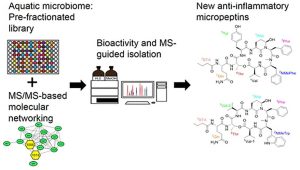
New Micropeptins with Anti-Neuroinflammatory Activity Isolated from a Cyanobacterial Bloom
New Micropeptins with Anti-Neuroinflammatory Activity Isolated from a Cyanobacterial Bloom (June 4, 2021) Abstract Metabolite mining of environmentally collected aquatic and marine microbiomes offers a platform for the discovery of new therapeutic lead molecules. Combining a prefractionated chromatography library with liquid chromatography tandem mass spectrometry (LC-MS/MS)-based molecular networking and biological assays, we isolated and characterized
Continue Reading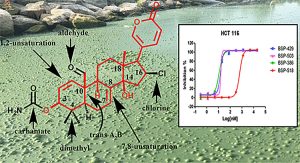
Cyanobufalins: Cardioactive Toxins from Cyanobacterial Blooms
Cyanobufalins: Cardioactive Toxins from Cyanobacterial Blooms (October 28, 2018) Abstract Cyanobufalins A–C (1–3), a new series of cardiotoxic steroids, have been discovered from cyanobacterial blooms in Buckeye Lake and Grand Lake St. Marys in Ohio. Compounds 1–3 contain distinctive structural features, including geminal methyl groups at C-4, a 7,8 double bond, and a C-16 chlorine
Continue Reading
Microcystins Containing Doubly Homologated Tyrosine Residues from a Microcystis aeruginosa Bloom: Structures and Cytotoxicity
Microcystins Containing Doubly Homologated Tyrosine Residues from a Microcystis aeruginosa Bloom: Structures and Cytotoxicity (May 30, 2018) Abstract Four new microcystin congeners are described including the first three examples of microcystins containing the rare doubly homologated tyrosine residue 2-amino-5-(4-hydroxyphenyl)pentanoic acid (Ahppa) (1–4). Large-scale harvesting and biomass processing allowed the isolation of substantial quantities of these compounds, thus
Continue Reading